









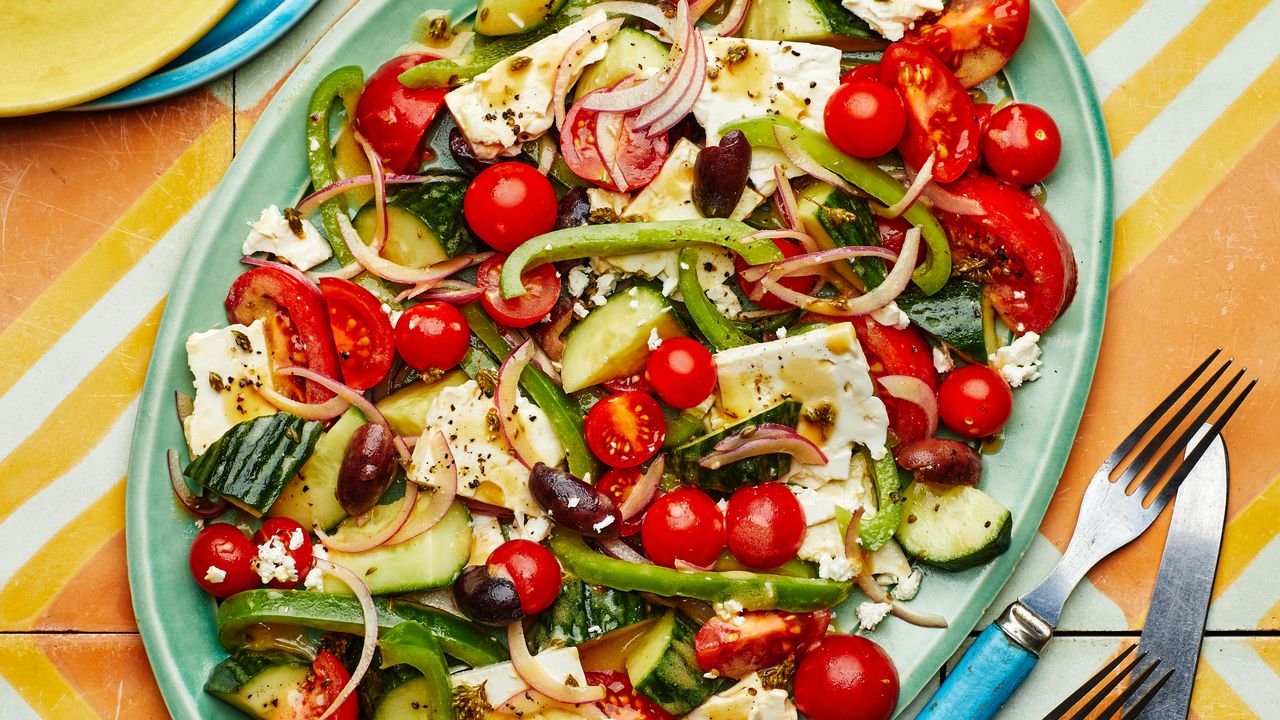
Authentic Greek salad (horiatiki) delivers an instant hit of fresh Mediterranean flavors by combining juicy tomatoes, crisp cucumbers, briny olives, and rich slabs of salty feta dressed in a quick homemade vinaigrette—proving that peak-season produce needs zero lettuce filler to shine on your dinner table.
Mastering the Dressing and Assembly
A balanced vinaigrette brings this dish together effortlessly. Blending equal parts quality olive oil and vinegar with a touch of Dijon mustard and dried oregano creates a punchy dressing that coats every bite. To maintain optimal texture, cut feta cheese stored in brine into generous slabs rather than crumbling it, and toss the entire salad immediately before serving so the vegetables retain their natural crunch without turning watery.
This classic salad pairs exceptionally well with warm pita bread and grilled meats like chicken or pork, though it remains satisfying enough to serve as a standalone lunch.
Selecting the Ultimate Ingredients
The Best Tomatoes for Maximum Flavor
Select any fully ripe tomatoes available at the market. Combining different varieties—such as sweet cherry tomatoes, meaty Roma tomatoes, and colorful heirlooms—yields the superior contrast in texture and taste that defines a great horiatiki.

Choosing Crisp Cucumbers and Briny Olives
English and Persian cucumbers offer significant advantages over standard field cucumbers because their thinner skins and reduced seed count yield superior crunch without excess moisture. For the olive component, traditional Kalamatas contribute a distinct wine-like brine, though varieties such as Castelvetrano, Picholine, or Niçoise serve as reliable alternatives.
Why Block Feta in Brine Matters
Always opt for whole blocks of feta packaged in natural brine. This variety maintains a far creamier texture and higher moisture content than pre-crumbled options. Slicing the feta into substantial slabs prevents the cheese from dissolving into the liquid dressing when tossed.
Dressing Variations and Substitutions
Fresh lemon juice can completely or partially replace the traditional vinegar in the vinaigrette. This straightforward swap brightens the overall profile, introducing a vibrant, citrus-forward acidity to the dish.