



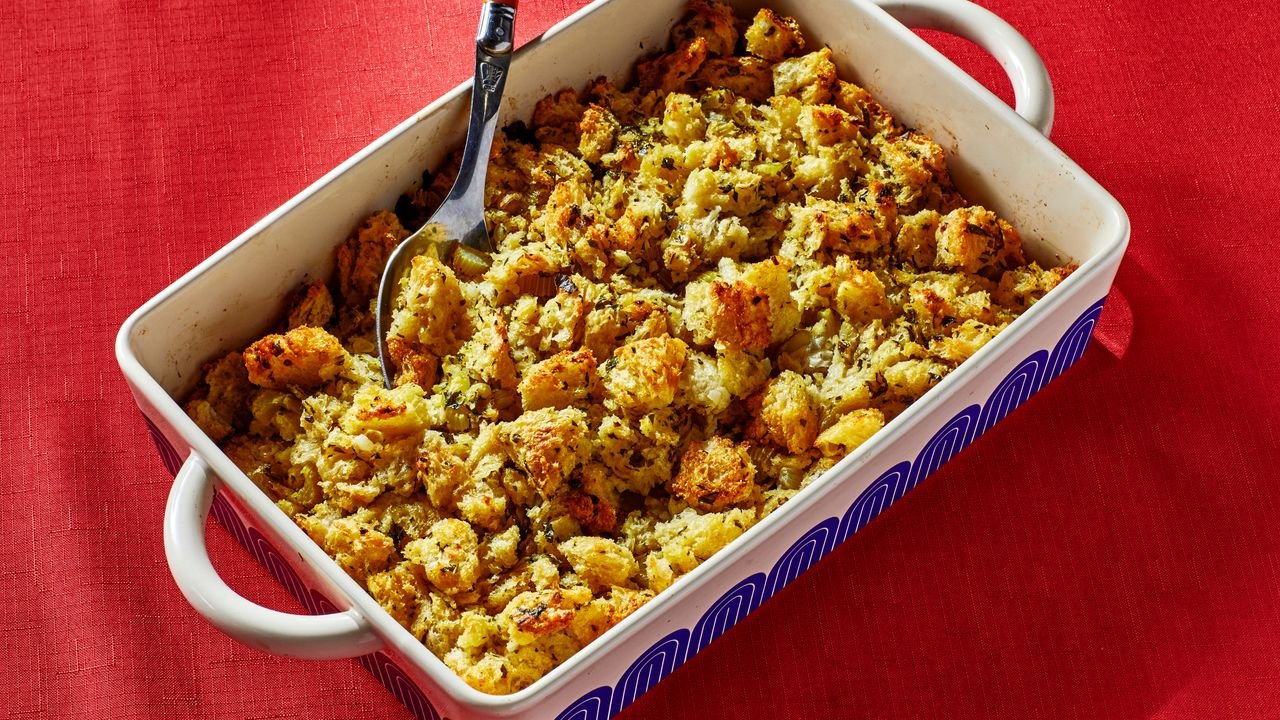
Food stylist Victoria Granof’s legendary Simple-Is-Best Stuffing remains the gold standard for Thanksgiving cooks across America because it delivers maximum flavor and crispiness with minimal effort. Debuted over a decade ago, this streamlined recipe continues to dominate holiday tables, earning high praise from top culinary professionals—including former Bon Appétit test kitchen director Carla Lalli Music, who calls it “everything you want about stuffing—straight down the middle.”
The Secret to Superior Flavor: Stock and Fresh Herbs
The foundation of a memorable stuffing relies heavily on quality stock and vibrant aromatics. While homemade turkey or chicken stock yields the richest depth, high-quality store-bought chicken broth serves as an efficient alternative, provided you select low-sodium varieties to retain precise control over seasoning. Dried herbs simply cannot compete with fresh herbs in this application; generous amounts of fresh parsley, sage, rosemary, and thyme provide the signature herbal brightness essential for a standout Thanksgiving side dish.
Selecting Bread for the Ultimate Rustic Texture
Uniform bread cubes are deliberately rejected in favor of hand-torn, ragged pieces from a crusty loaf. These irregular chunks create a far more dynamic texture, blending tender, custard-soaked interiors with sharp, crunchy edges. Sturdy white loaves—such as pane Pugliese, boule, or miche—hold up exceptionally well, as does a quality sourdough like pain de campagne. Soft, packaged sandwich bread must be avoided entirely, as it lacks the structural integrity needed to withstand the liquid and butter.
How to Bake Ahead and Freeze Your Holiday Stuffing
Achieving the dish’s distinct texture requires a smart two-stage baking method. The first stage cooks the bread and custard through, while the second stage browns and crisps the top layer. Cooks can complete the initial bake up to 3 days in advance and keep the dish refrigerated, or freeze it for up to 6 months. On Thanksgiving Day, a final pass in the oven yields those freshly toasted, crunchy crags without added stress.
Stuffing vs. Dressing: What is the Difference?
Because this recipe bakes in a standalone casserole dish rather than inside a bird, culinary classification technically defines it as a “dressing” rather than a “stuffing.” While modern usage treats the terms as interchangeable, Granof originally published the dish under the title Simple Is Best Dressing. For those seeking a meat-forward option, a Sausage and Herb Stuffing variant builds directly on this minimalist base by adding savory, sage-seasoned sausage.
Why You Shouldn’t Cook Stuffing Inside the Turkey
Baking stuffing inside a raw turkey cavity is generally discouraged by culinary safety experts. Bringing the dense center of the stuffing to a food-safe temperature inevitably forces the surrounding poultry meat to overcook, resulting in a dry turkey. Those committed to a traditional stuffed bird should instead rely on dedicated recipes, such as Classic Stuffed Turkey With Old-Fashioned Gravy.
Repurposing Leftover Thanksgiving Stuffing
Beyond standard reheating, leftover stuffing offers versatile culinary uses. Tearing cold leftover pieces into small clusters and roasting them on a sheet pan converts the stuffing into ultra-crispy, crouton-like shards. These crunchy bits serve as an exceptional topping when tossed into a bitter radicchio salad or paired with other post-holiday dishes.