







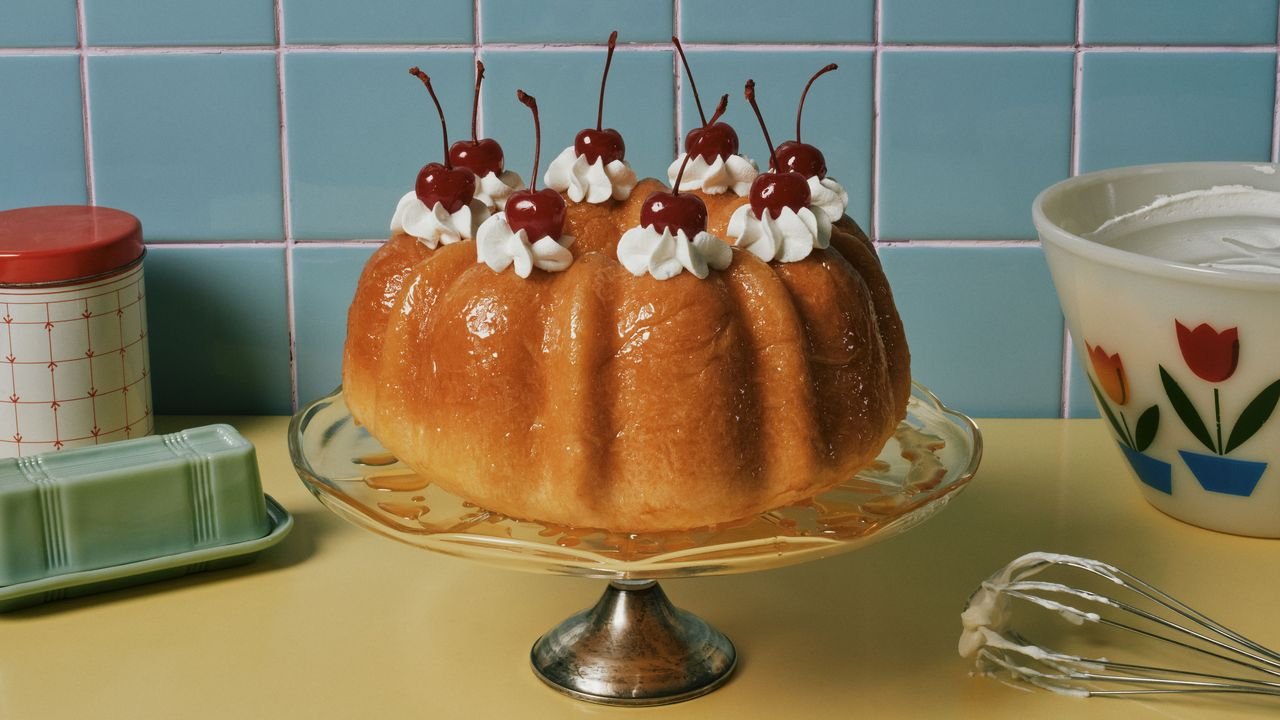
Bakeries across Europe are famous for the traditional rum babà, but home cooks can now transform this individual boozy pastry into a single, crowd-pleasing giant Bundt cake today for a much easier baking experience.
Understanding the Classic European Rum Babà
The classic rum babà remains a beloved fixture across European pastry shops, offering a delightfully soaked, indulgent treat with subtle regional variations. The traditional recipe centers on a rich, brioche-like dough baked in tiny individual molds, which is then submerged in a potent simple syrup spiked with alcohol. While dark rum is the classic spirit of choice, limoncello serves as another popular alternative.
Preparation techniques vary when it comes to liquid absorption. Some bakers squeeze the small baked cakes to press out excess air and force the syrup deep into the center of the brioche. Others allow the dough to sit undisturbed, drinking up as much liquor as possible like skin absorbing lotion. Regardless of the exact method, the final pastry achieves an ideal textural balance—light and fluffy, yet thoroughly saturated with boozy sweetness in every bite.
Scaling Up: The Bundt Pan Transformation
This modernized recipe takes the core elements of the traditional dessert and expands them to fit a full-sized Bundt pan. By eliminating the tedious process of shaping and monitoring dozens of small individual buns, bakers can produce one striking loaf with minimal effort.
After baking, the large loaf is bathed in a generous portion of rum syrup infused with fresh citrus. As the bread rests, it completely absorbs the flavorful liquid, taking on a strikingly glossy sheen. The finished creation offers flexible serving options: slice it cleanly into elegant wedges or tear off pieces by hand like a rustic cake.
Temperature Control: The Secret to Perfect Texture
Patience plays a critical role in the success of this large-format dessert. The baked bread must cool completely before receiving the citrus-rum infusion. Pouring syrup over a warm loaf disrupts the internal crumb structure, preventing the bread from setting correctly and resulting in a gummy, mushy center.