









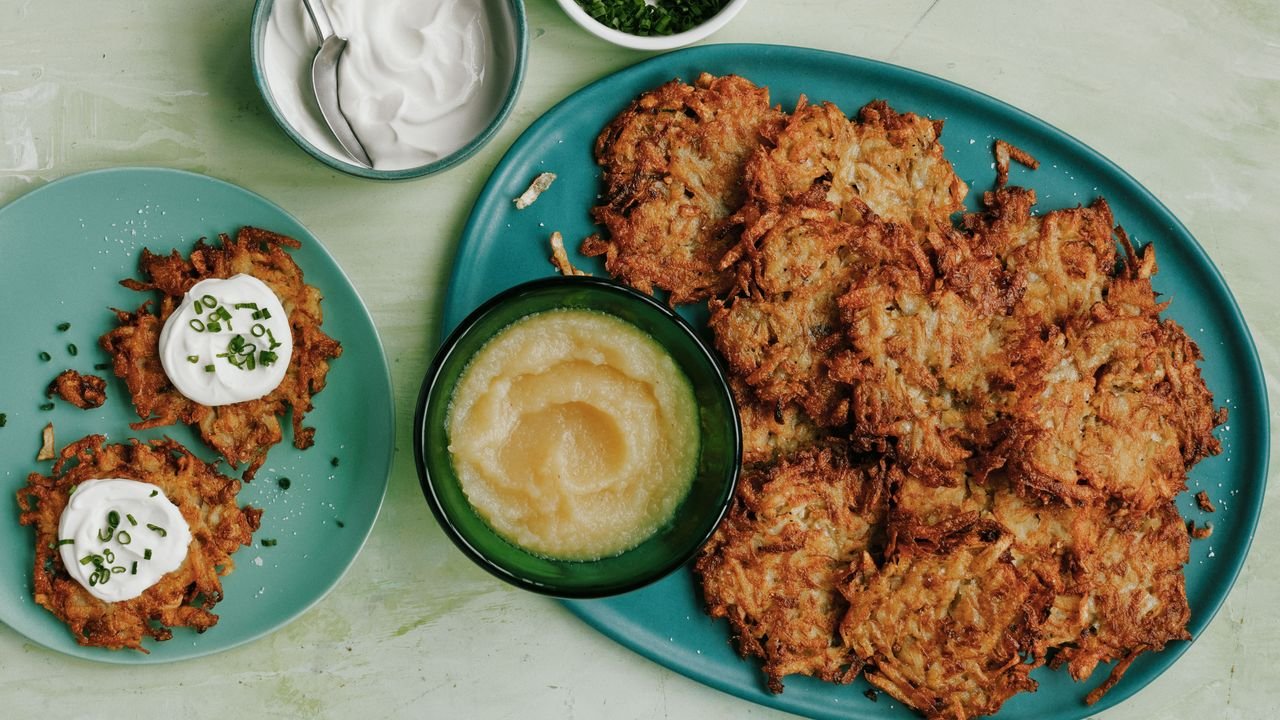
Achieving the perfect potato latke requires precise technique, yielding a dish that is deeply savory, crisp at the edges, and fluffy in the center. Using high-starch Russet potatoes provides the ideal structural base to deliver this signature texture, while swapping a single Russet for a sweet potato introduces a subtle sweetness to the batch.
Optimizing Texture with the Right Binder
While cooks often utilize binders such as flour, matzo meal, breadcrumbs, or baking powder, potato starch emerges as the superior option. Potato starch creates an ultra-crispy exterior without weighing down the mixture, with the added benefit of keeping the dish naturally gluten-free.
Frying Techniques: Oil vs. Traditional Schmaltz
The choice of cooking fat significantly impacts both browning and flavor profile. Frying in a neutral oil guarantees the most consistent and even browning across every batch. Alternatively, schmaltz (chicken fat) offers a rich traditional taste. When using schmaltz, maintaining medium heat is critical, as its lower smoke point causes the latkes to brown much faster.
Serving Recommendations and Leftover Ideas
For optimal taste, serve latkes piping hot alongside sour cream and homemade applesauce. Elevating the presentation is simple by topping the sour cream with fresh chives, chopped dill, chili crisp, or smoked salmon. Should any latkes remain, they can be repurposed as hash browns and incorporated directly into a breakfast sandwich.