







Baking experts have unveiled essential culinary techniques that allow home cooks to eliminate soggy crusts and runny fillings when making fruit pies. Successfully baking a peach-blueberry crumb pie requires precise cooling times, specific fruit selections, and a crucial stovetop prep step to ensure structural integrity and vibrant flavor.
The Science of Cooling: Why Patience Yields Clean Slices
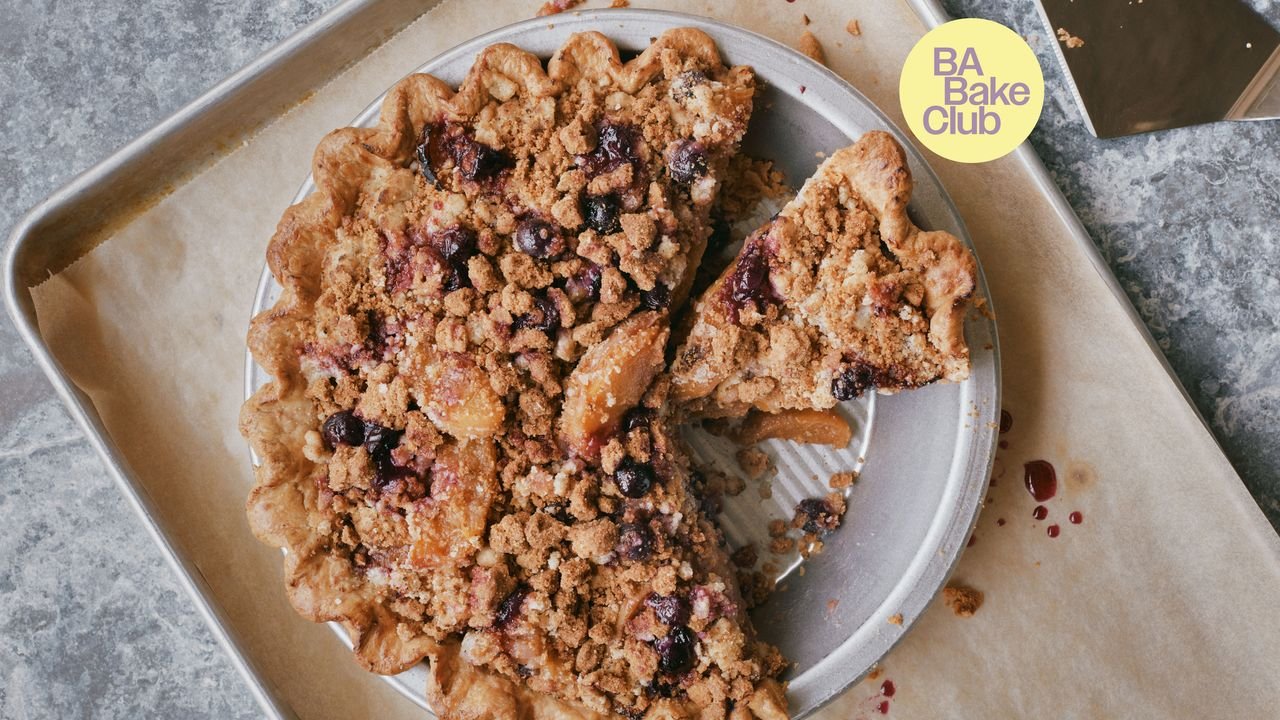
The single most challenging phase of fruit pie preparation is not rolling the pastry crust, but allowing the finished pie to cool completely before slicing. Cutting into a warm fruit pie after only one hour is a common mistake that ruins the final presentation. Fruit pie fillings rely on starches, such as cornstarch, to set properly through a thermal stabilization process known as retrogradation. Skipping this resting period causes the warm filling to spill out rapidly like a punctured pool.
For ideal structural firmness, a fruit pie requires a resting window of four to eight hours at room temperature. To achieve the absolute cleanest, most precise slices, chilling the baked pie in the refrigerator for several additional hours prior to serving yields professional results.
Selecting Fruit: Why Underripe Peaches Perform Best
Selecting the optimal fruit for baking differs significantly from choosing fruit for raw consumption. High-performing peach pies depend on slightly underripe peaches that feature a firm, almost crunchy texture similar to apples. These firmer peaches contain higher levels of natural pectin and acid, allowing them to maintain their structural shape during prolonged exposure to oven heat, whereas fully ripe peaches rapidly break down into mush.
Even firm or mediocre fruit transforms into a fragrant, jammy filling when paired with measured amounts of sugar, fresh lemon juice, and warm spices. Unthawed frozen peaches can serve as an exact one-to-one substitute for fresh fruit, though they require a few extra minutes on the stove to release their stored liquid.
Precooking Fruit: The Ultimate Fix for Crisp Bottom Crusts
The definitive technique for preventing a soggy bottom crust involves precooking the fruit mixture on the stovetop before assembling the pie. Stovetop simmering forces the fruit to release its moisture early, allowing a modest amount of cornstarch to bind the liquid into a thick, controlled gel before it ever enters the pastry shell.
Conversely, placing raw fruit directly into an unbaked pie shell leads to excessive liquid release inside the oven. This forces bakers to over-index on raw thickeners, frequently yielding a gummy filling and a soft, underbaked bottom crust.