









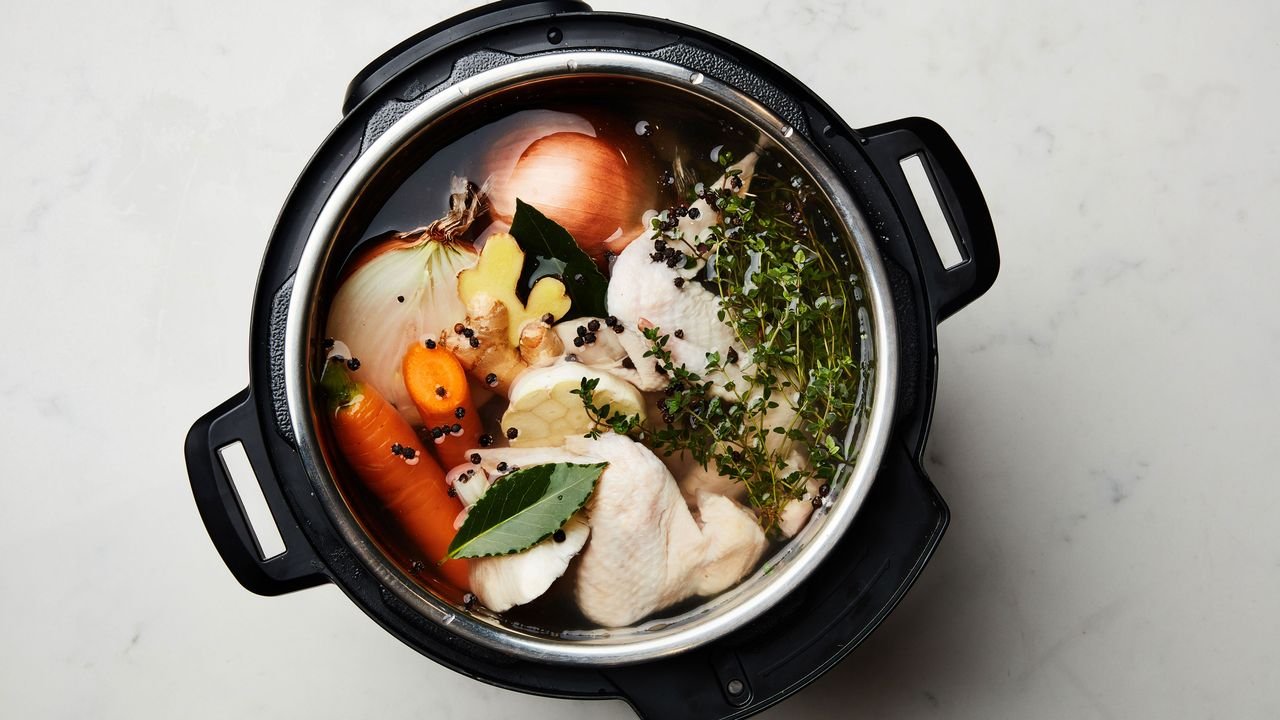
Home cooks can now extract deep, savory flavor and a silky, gel-rich texture from simple chicken bones in just 40 minutes using an Instant Pot, bypassing the traditional three-hour stovetop simmering method. This high-pressure technique releases maximum richness from fresh chicken wings or leftover carcasses, yielding an extremely versatile base designed for soups, risottos, and braises.
Why the Instant Pot Outperforms Traditional Methods
Pressure cooking dramatically speeds up the extraction of gelatin and flavor compounds from chicken parts. Rather than watching a pot simmer on the stove for hours, the sealed environment of an electric pressure cooker breaks down connective tissues under high heat and pressure. The result is a full-bodied, restaurant-quality stock produced in less than an hour.
For added depth, incorporating fresh ginger introduces a subtle warmth and aromatic brightness. This addition works exceptionally well in light noodle soups and plain rice dishes, though the recipe remains highly customizable based on culinary needs.
Choosing the Best Bones for Maximum Richness
The structural quality of stock relies heavily on collagen. Choosing the right cut determines how well the final broth will body up and gel once cooled.
Selecting Collagen-Rich Cuts
When purchasing fresh poultry specifically for stock, chicken wings offer an abundance of collagen. Alternatively, utilizing a leftover roast chicken carcass—including the back and neck—yields a deeply flavorful base that naturally sets into a soft gel when chilled in the refrigerator.
Prioritizing Flavor Over Clarity
Unlike refined French consommés, this high-yield pressure cooker stock focuses entirely on robust taste rather than crystal-clear transparency. A slight haze in the liquid is completely normal and has zero negative impact on the final taste profile.
Critical Cooking and Seasoning Rules
Executing a well-balanced stock requires attention to pressure limits and proper salt timing to avoid over-concentration.
Respecting the Max Fill Line
Never exceed the Instant Pot’s designated maximum liquid line when adding water. Overfilling prevents the appliance from pressurizing correctly and leads to watered-down broth. Keeping the liquid level precise guarantees adequate pressure and concentrated flavor.
Strategic Seasoning Protocol
Timing your salt application is crucial. If the stock will be used immediately, season it right after straining. However, if the stock is intended for reduction in braises or for long-term freezing, withhold salt during the initial preparation. As stock reduces, concentrated salt levels can quickly make a dish inedible.
Proper Cooling, Fat Removal, and Storage
Managing the storage process correctly ensures both safety and maximum utility of cooking byproducts.
Modern refrigeration units can easily handle warm liquids, meaning there is no need to wait for the stock to reach room temperature before chilling. Place the strained stock directly into the refrigerator. As it cools, a solid layer of fat will rise to the surface. Skim this fat layer off once firm; rather than discarding it, save the fat in a sealed container to use as a high-flavor cooking medium for roasting or sautéing vegetables. Once the fat cap is removed, the stock is ready for immediate use or transfer to the freezer for long-term storage.