









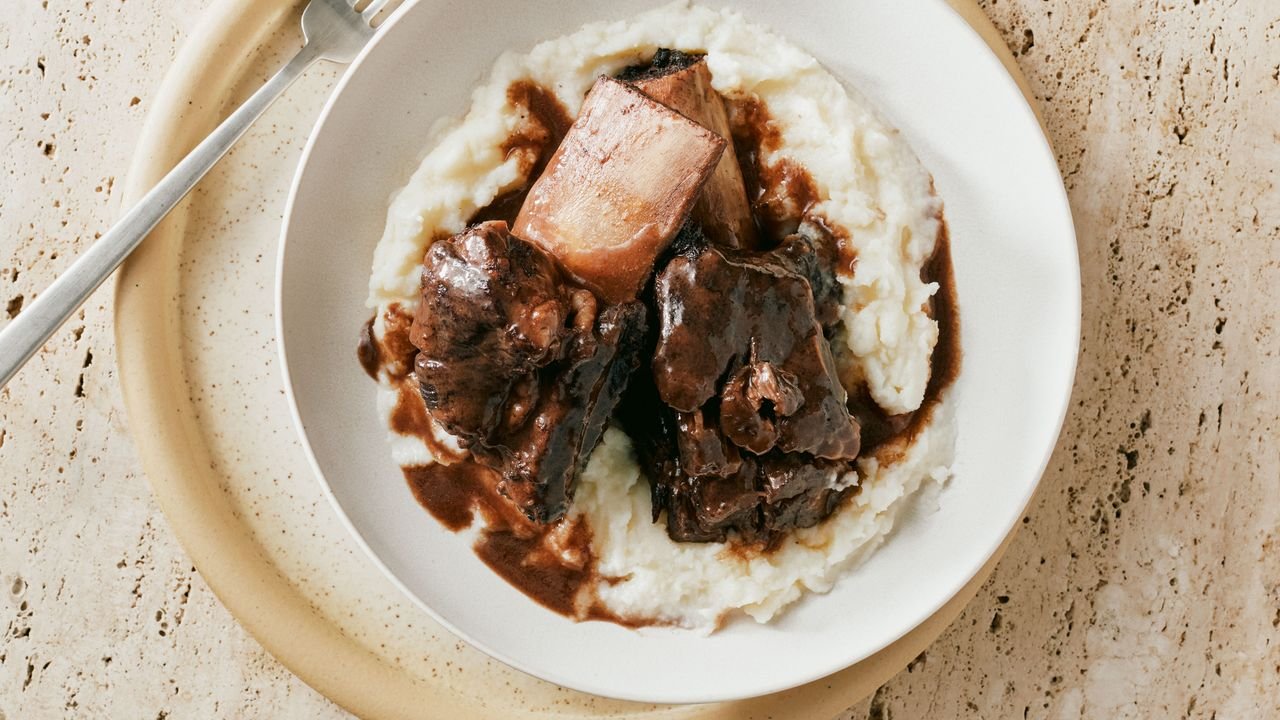
Home cooks can achieve restaurant-quality results at home for any special occasion by mastering red wine-braised short ribs, a fail-proof dish that delivers deeply savory, fall-off-the-bone tender beef paired with a rich, glossy sauce.
Building Layers of Deep Culinary Flavor
This long-standing favorite relies on a simple, highly reliable method. Bone-in beef short ribs are first browned to create a caramelized crust, then slowly braised in a dry, full-bodied red wine alongside aromatics like onions, carrots, celery, and concentrated tomato paste. As the meat simmers gently, these ingredients infuse the braising liquid with robust flavor before being strained out to produce a smooth, restaurant-grade reduction.
Sauce Finishing: Silky vs. Rustic
Straining the cooking liquid creates an elegant, mirror-shine gravy. However, home chefs looking for a thicker, more rustic finish can pluck out the hard herbs and purée the remaining cooked vegetables directly into the braising liquid.
The Ideal Make-Ahead Dish for Entertaining
Red wine-braised short ribs taste even better the day after cooking. The flavors consolidate and deepen overnight, making this meal a low-stress, high-impact centerpiece for hosting guests. To serve, pair the tender ribs with mashed potatoes, creamy polenta, risotto, or egg noodles to absorb the glossy sauce.
Technical Tips and Frequently Asked Questions
What is the best way to reheat short ribs?
To prepare short ribs ahead of time, allow them to cool completely directly in the sauce, then refrigerate overnight. The next day, easily skim the chilled fat off the surface, cover the dish, and reheat gently in an oven set to 325°F–350°F until thoroughly warmed.
Which wine is best for braising beef short ribs?
Any dry red wine works well for this recipe. Cabernet Sauvignon delivers strong structure to the sauce, while Pinot Noir or Rhône-style red blends produce a softer, fruitier outcome. Select a bottle you enjoy drinking, as the braise requires a full bottle—and consider grabbing a second bottle to serve with the meal.
Can boneless short ribs be used instead of bone-in?
Boneless cuts can be substituted, though bone-in short ribs offer superior depth of flavor and a richer sauce body thanks to gelatin release. If opting for boneless beef, check for doneness earlier, as cooking times will be slightly shorter.
How do you know when short ribs are fully cooked?
Short ribs are finished when they are fork-tender and practically falling off the bone. Begin checking progress at the two-hour mark, though full tenderization often requires closer to three hours. Always measure doneness by texture rather than relying strictly on the clock.