









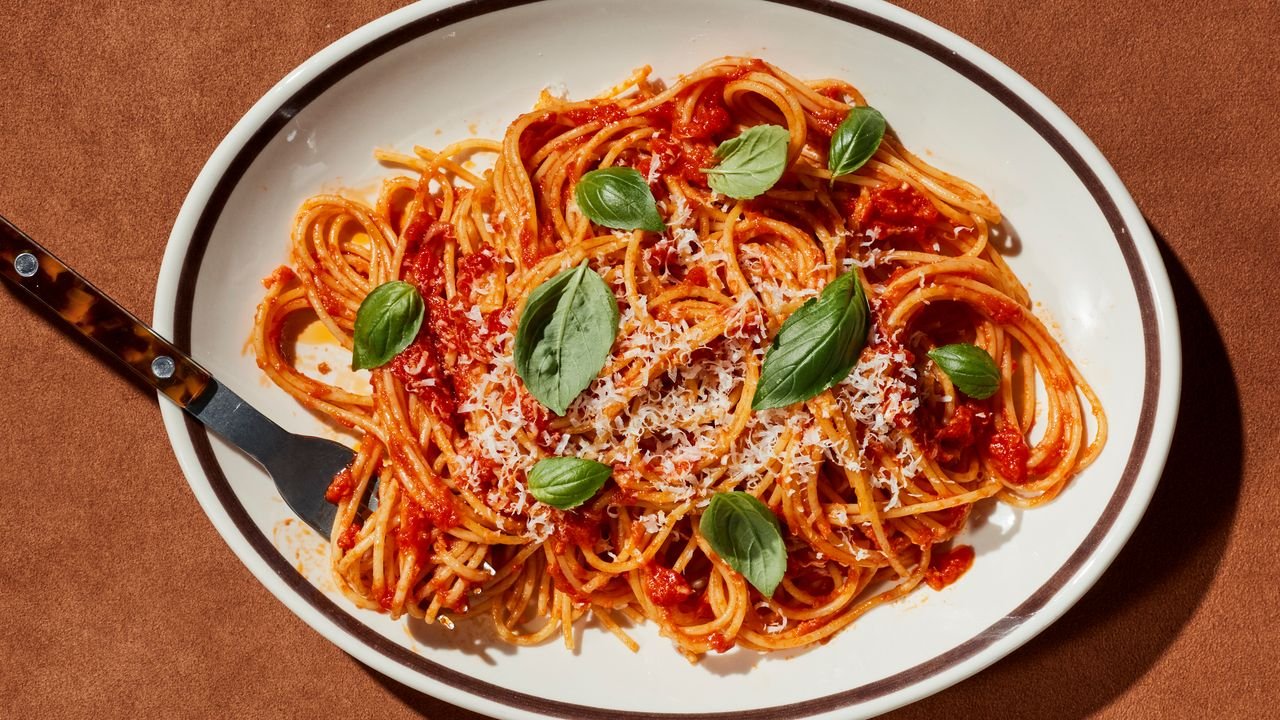
Italian home cooks and professional chefs rely on traditional spaghetti pomodoro—a timeless Italian staple featuring pantry ingredients like canned whole peeled tomatoes, garlic, olive oil, fresh basil, and Parmesan—to deliver a silky, restaurant-quality pasta dinner in minutes.
The Essential Technique for a Glossy Pomodoro Sauce
Creating an exceptional pomodoro sauce comes down to treating simple ingredients with precision. The key step involves draining and browning whole peeled tomatoes before reintroducing their juices, a method that intensifies their natural sweetness. Finishing cooked spaghetti directly inside the pan alongside starchy pasta water creates a rich, cohesive emulsion that coats every individual strand. A final addition of butter and finely grated Parmesan elevates the texture, providing richness while preserving the bright tomato flavor.
This approach works seamlessly for fast weeknight meals or foundational culinary training, making classic spaghetti pomodoro a mandatory recipe for every home kitchen.
Pomodoro vs. Marinara: Understanding the Key Differences
While both represent classic Italian tomato-based sauces, pomodoro features a simpler, lighter profile centered on tomatoes, extra virgin olive oil, garlic, and fresh basil. In contrast, marinara often incorporates extra seasonings and aromatics, including onions, oregano, and red pepper flakes, producing a bolder, herb-forward taste. Pomodoro delivers a smooth, delicate consistency that allows the pasta itself to remain the primary highlight.
Selecting the Best Canned Tomatoes
Whole peeled canned tomatoes offer maximum texture control as they break down naturally during cooking. High-quality varieties yield superior results, specifically certified San Marzano DOP, Bianco DiNapoli, or Muir Glen tomatoes.
Allowing pasta to cook its final minute directly in the pan enables the noodles to absorb depth from the sauce, while starch-rich cooking liquid binds the olive oil, butter, cheese, and tomato juices together effortlessly.
How to Prevent Parmesan Cheese From Clumping
Optimal Grating Tools and Methods
To achieve seamless integration, grate fresh Parmesan using the smaller holes of a traditional box grater instead of a microplane or rasp grater. Ultra-fine wisps tend to clump upon contact with heat, whereas the slightly larger, irregular granules from a box grater melt evenly. Alternatively, pulse solid Parmesan blocks in a high-powered blender until they reach a medium-fine consistency similar to classic deli counter cheese.
Temperature Control and Sauce Adjustments
When mixing cheese into the dish, continuously toss the pasta and ensure the sauce retains enough moisture to incorporate the dairy. If the mixture thickens too rapidly, pour in an extra splash of reserved pasta water before adding remaining cheese to maintain a sleek, glossy finish.