








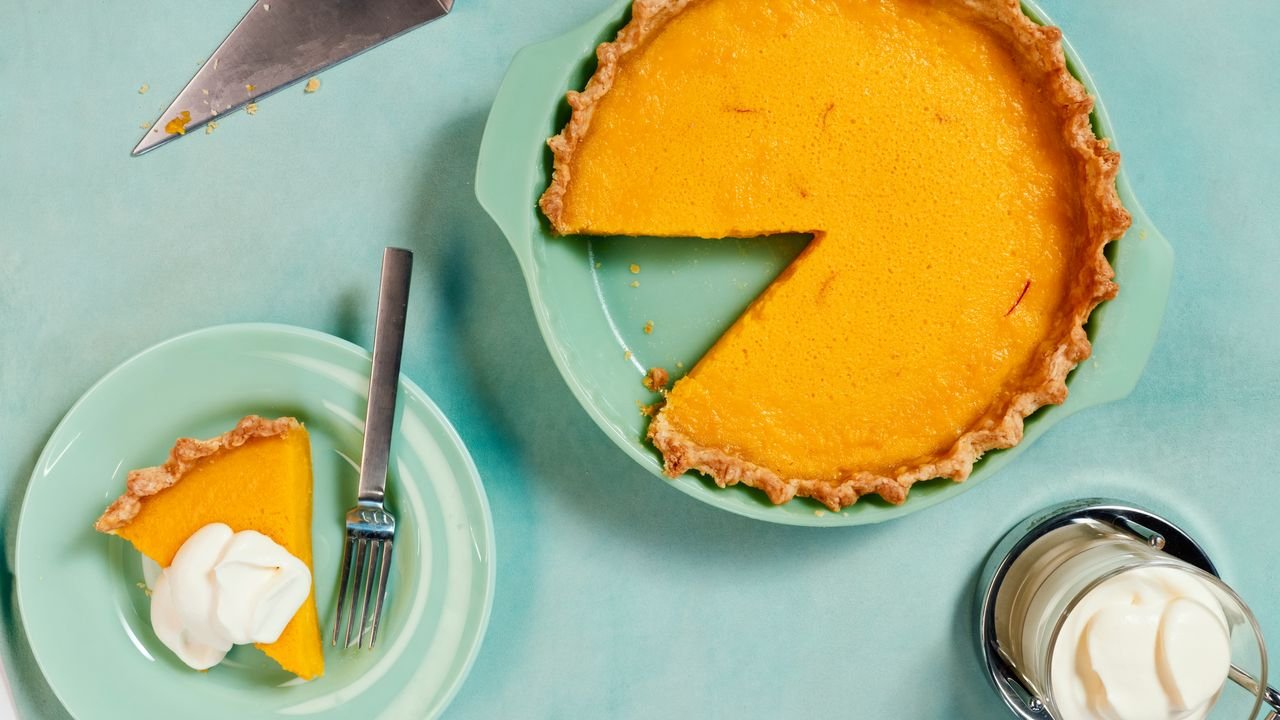
Created over a decade ago by cookbook author and former Bon Appétit food editor Alison Roman, the iconic Lemon Buttermilk Pie remains one of the most celebrated dessert recipes in American home baking due to its fragrant citrus filling, silky custard, and ultra-flaky crust.
A Vibrant Twist on Southern Tradition
Rooted in early American culinary history, buttermilk pie originated as a classic Southern dessert crafted from humble pantry staples—eggs, sugar, butter, and cultured dairy. These simple ingredients allowed historic bakers to create an affordable, rich dessert without relying on fresh fruit or costly imports. Roman’s modern interpretation stays faithful to that creamy custard foundation while elevating the flavor profile with fresh lemon zest and lemon juice for a bright, refreshing punch.
To add subtle complexity, the recipe incorporates a delicate pinch of saffron. This optional addition infuses the pie with a golden hue and gentle floral undertones without overpowering the citrus. Bakers looking for an alternative to saffron can easily substitute a tiny splash of almond extract to achieve a similarly intricate flavor depth.
The Essential Role of Buttermilk and Easy Substitutions
Buttermilk acts as the defining element in both the filling and the pastry. In the custard, its subtle acidity cuts through the sweetness of the sugar, yielding a refined balance. Within the dough, buttermilk tenderizes the gluten, creating a noticeably light, flaky texture.
While buttermilk is integral to the original recipe, precise substitutions can be utilized if necessary. Plain kefir serves as an ideal 1:1 replacement, offering the same acidity and viscosity. Alternatively, plain whole-milk yogurt thinned with a small amount of milk until pourable functions as an effective swap.
Key Crust Techniques: Blind Baking and Handling
Executing the crust properly requires careful technique. Dough should be handled as gently as possible to preserve the cold butter pockets responsible for maximum flakiness. Blind baking—pre-baking the empty pie shell before pouring in the custard—is mandatory. This critical step sets and browns the crust in advance, preventing a soggy bottom once the liquid filling is added.
Serving Recommendations
Once baked, the pie must cool completely to allow the custard filling to set to a silky, sliceable consistency. For optimal presentation and flavor contrast, serve each slice accompanied by a dollop of softly whipped cream.